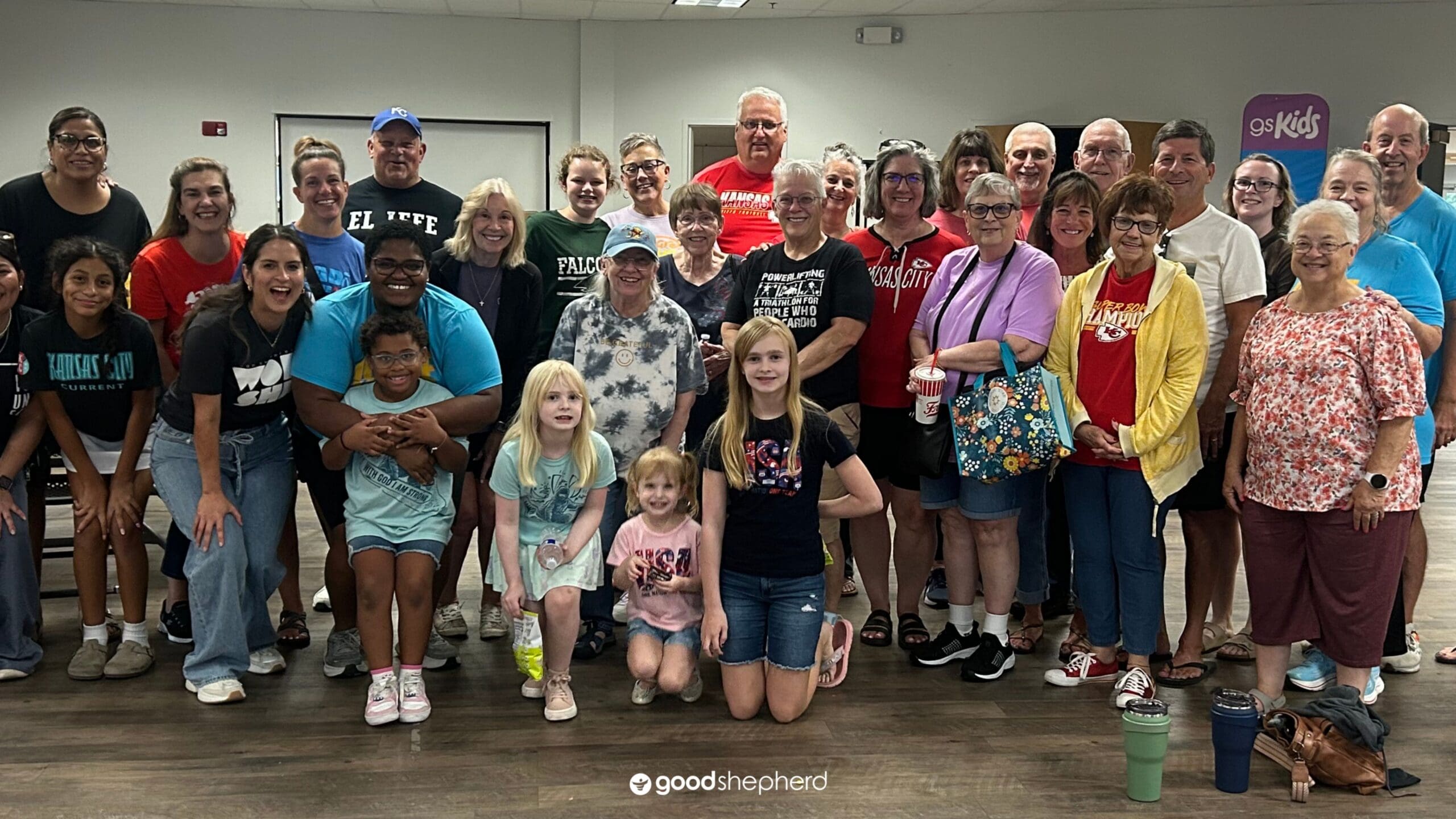
For much of her life, Shanice Gipson knew church.
She had experienced Baptist churches, Pentecostal churches, the LDS church, and others in between. She had been deeply involved in many of them. But over time, she began wrestling with what she’d experienced, especially how faith could be used to decide who belonged and who didn’t.
Too often, she said, “Come as you are” seemed to carry an unspoken caveat: don’t stay who you are.
Many times, walking into a church felt more like an audition than an invitation.
Eventually, Shanice entered what she describes as an eight-year crisis of faith. For a while, she swore off church altogether.
Still, something in her longed for community.
For a year or two, she found herself praying for it. She looked at churches online, something made easier during COVID.
Then came an invitation from perhaps the last person she expected.
Her best friend, a believer but skeptical of churches, told her, “Hey, we’re going to go check out this church on Sunday.”
Even though it would be a drive for both of them, Shanice went.
The Lee’s Summit church ultimately proved too far from home, but the experience opened a door she had thought was closed.
“The Lord is in the details,” Shanice says. After all those years away from church, she can’t overlook the significance, or perhaps the grace, of her best friend being the one who helped lead her back.
Shortly after, Shanice found Good Shepherd.
Here, she said, something felt different.
She didn’t feel as though she had to audition. She found a community where people could acknowledge that nobody is perfect, everyone can grow, and everyone has something to contribute.
“You can be human here,” she says.
For Shanice, belonging soon turned into serving.
As she became increasingly aware of the challenges facing immigrant families and people for whom English isn’t their first language, she wanted to help create a greater sense of connection. She and another Good Shepherd member, Amanda, helped create a Bilingual Support Group, giving people another place to find connection and support within the community.
Then Shanice began finding other places where her abilities could be useful.
While pursuing an MBA in data science at Rockhurst University, she has volunteered with Good Shepherd’s media and building teams. She has worked on the website and social media and helped create reels and videos for ministries including gsKids and Vacation Bible School.
In her professional life, Shanice talks about wanting to “bridge the gap,” bringing people, information, and resources together and helping move something from beginning to end.
In many ways, that’s also what serving has allowed her to do at Good Shepherd.
And that’s why Serve Expo stands out to her.
Instead of trying to figure out on your own where you might fit, Serve Expo brings Good Shepherd’s many serving opportunities together in one place. Shanice remembers walking from table to table, hearing what different ministries needed, and considering what she could offer.
Her advice for someone attending this year’s Serve Expo is simple:
Be open.
Don’t walk in with a preconceived idea of what serving is supposed to look like or what you think you have to offer. Walk around. Ask questions. Be willing to be vulnerable enough to discover something about yourself.
You may even unearth a talent you haven’t used in years.
Maybe you once loved home improvement projects. Maybe you’re comfortable with technology. Maybe you’re good with children. A skill that seems ordinary to you may be exactly what someone else needs.
Sometimes what we have to give is something we already know how to do.
And as our lives change, what we have to offer changes with them.
Shanice also recognizes how easy it is to look at an already-full life and immediately think of the reasons serving won’t work. She is in graduate school and raising her niece. Time is limited.
But she challenges people to flip the question.
Look for the reasons you can serve instead of the reasons you can’t.
Serving doesn’t have to consume your life. It is an investment in the community you’re already part of, and that investment has a way of expanding outward.
For someone who once wondered whether a church community existed where she could fully belong, serving has become part of the answer.
She came looking for a community where she could be herself.
She found one that also made room for what she had to give.
